

It has been a busy few months for FAIR Station. Our team has grown and we’re learning more about the different ways that FAIR Station can provide value to the field station community. We wanted to take a moment to share some updates, what’s coming next, and how to get involved.
Welcome Patrick and Meeting in Person
We’re excited to welcome Patrick Perkins as FAIR Station’s Senior Platform & Web Application Engineer, a role hosted through Code for Science & Society. Patrick brings deep experience building interoperable platforms in library and research environments.
During Patrick’s first week, the team got together onsite at the California Digital Library offices in Oakland, California. We also spent a day at UC Davis’ Quail Ridge Reserve learning about trapdoor spiders and Sentinel Sites for Nature.
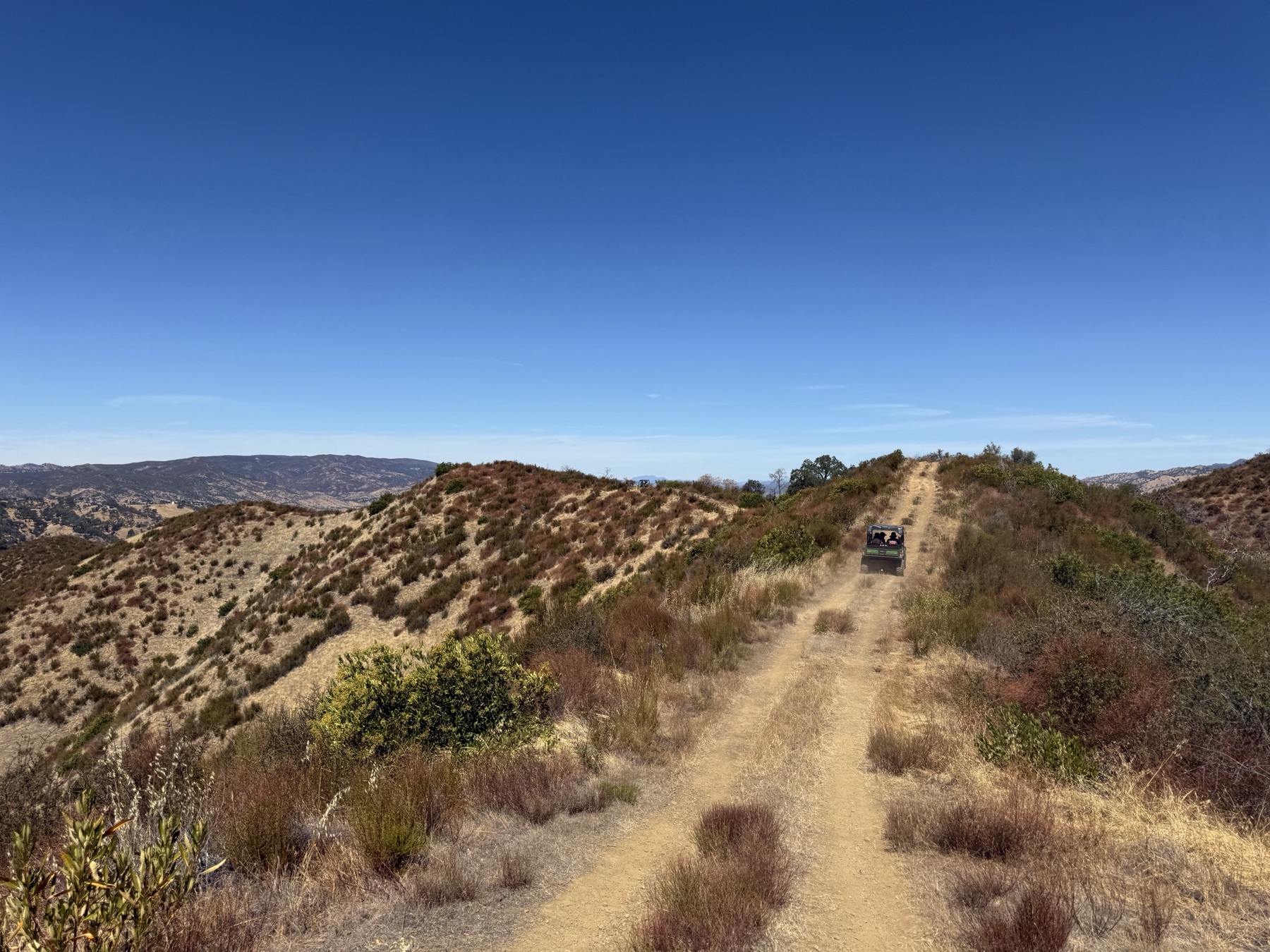
Time together in person, both around a table and in Bay Area traffic, gave us the chance to align on priorities, work through open questions, and have the kinds of detailed conversations that can be difficult to replicate over video calls.
Many of the decisions and directions described below took shape during those conversations.
A First Slice and What It Means for UC Nature
Over the past few months, some of the work we previously described as the FAIR Station MVP has moved from planning into production in RAMS, the platform UC Nature uses to manage research projects, visits, and station access across its network.
Researchers can now connect their ORCID iD in RAMS, creating a persistent link between the person doing the research and their activity at UC Nature reserves. We have also added ROR identifiers for institutions and begun normalizing existing institution records, helping address years of free-text names, abbreviations, and duplicate records.
For UC Nature, these changes have immediate practical value:
- Cleaner, more consistent information about researchers and institutions
- Less manual cleanup of institutional records
- Better reporting across the UC Nature network
- A stronger foundation for connecting projects and visits to the datasets, publications, and other research outputs that follow
We have also released an initial RAMS API. We see extensibility as a key part of the path forward for both FAIR Station and RAMS. Rather than building every new capability directly into the reservation platform, the API creates a structured way for FAIR Station and other authorized applications to work with RAMS data and support a broader ecosystem of integrations.
These changes deliver a first working slice of value in UC Nature today, while creating the identifiers and interfaces we need to build out the broader FAIR Station vision.
At the same time, we have continued improving RAMS itself, with work focused on accessibility, security, reliability, maintainability, and reducing assumptions that are specific to UC and California. That work is important both for UC Nature and for making RAMS easier for other field stations and marine laboratories to evaluate, adopt, and extend.
Clarifying Our Architecture and Adoption Strategy
Our current hypothesis is that no single operational system will work for every field station or marine laboratory. Recent conversations with station managers, reviews of existing workflows, and engagement with the OBFS community have reinforced just how varied those environments are.
Some organizations are looking for a full reservation and research management system. Others have mature systems they want to keep, while some rely on lighter-weight tools. FAIR Station needs to support all of those environments.
We will continue investing in RAMS as the first implementation environment for FAIR Station capabilities, while designing FAIR Station to work across different operational systems. Our focus now is on testing those paths with real organizations and learning what the technical and operational requirements look like in practice.
That means questions like: How can we add value and build on tools and systems that are already in place and working well? What information needs to move between systems? Where should FAIR Station functionality live? And how can we make participation realistic for organizations with very different levels of technical capacity?
We are actively looking for partners. If you manage a field station or marine laboratory and would be interested in helping us test one of these approaches, please reach out at hello@fairstation.org.
Next Up
Over the coming months, we will continue building on the work described above. RAMS and its use across UC Nature are central to that work. The broader FAIR Station goals around research data, identifiers, and outputs depend on strong workflows for reservations, projects, visits, and reporting.
We plan to:
- Continue improving RAMS workflows around reservations, projects, visits, and reporting
- Learn more about where information is lost, duplicated, or difficult to maintain across those workflows
- Expand the RAMS API and use it to support cleaner connections between operational data and FAIR Station services
- Continue testing ORCID, ROR, and other structured identifiers in real workflows
- Develop and evaluate approaches for connecting station-supported research to datasets, publications, and other outputs
- Share what we learn as the technical and operational model becomes clearer
At the same time, we will continue learning from other field stations and marine laboratories as we test how these approaches might work across different systems and environments.
If you have questions about FAIR Station or would like to get involved, please reach out at hello@fairstation.org.