About
Vision
Mission
Making Place-Based Research FAIR
Field stations and marine laboratories (FSMLs) are where observations are born and long-term studies take shape. They provide the conditions, expertise, access, continuity, and stewardship that make field-based discovery possible.
Yet the systems that support this work are often focused on logistics alone: reserving space, coordinating access, and managing operations. What happens next, how research is documented, shared, and ultimately reused, is typically handled elsewhere and often inconsistently. We see this as a missed opportunity.
FAIR Station aims to make the contributions of field stations more visible by creating stronger links between research activities and the datasets, samples, publications, and other outputs that follow. In doing so, it supports a more discoverable, reusable, and attributable record of place-based research.
Integrating FSML Research Outputs
Many field stations and marine laboratories (FSMLs) rely on ad hoc tools to manage their work, making it difficult to track who conducted research, what was produced, and how the station contributed to scientific advancement. When datasets, samples, and publications are eventually shared, the information needed to connect them to the original research context is often lost.
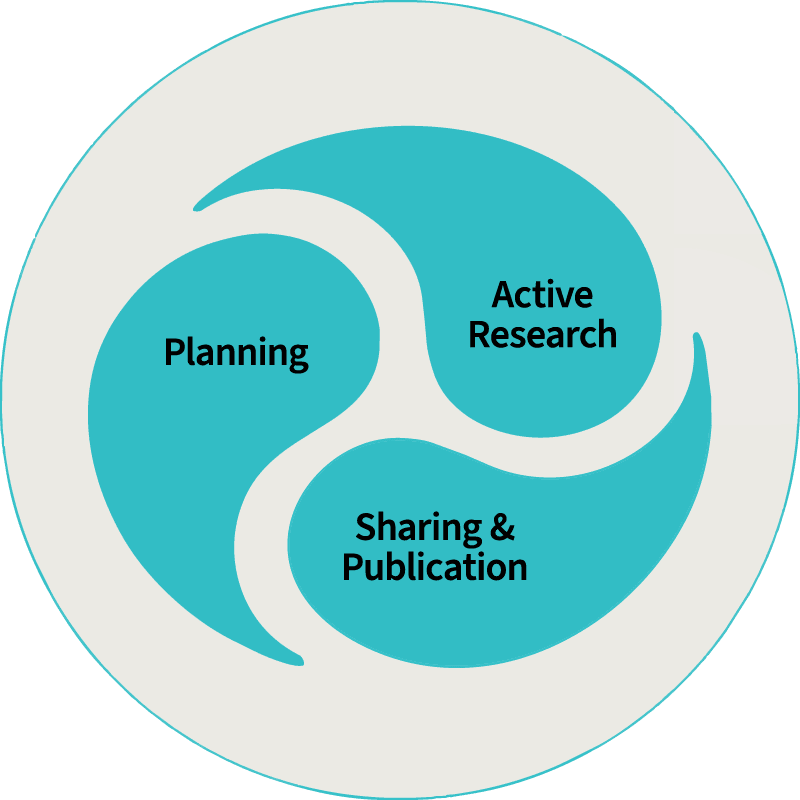
Our goal is to ensure that information generated in support of field research remains connected as projects evolve. By carrying key metadata forward through different stages of the research process, FAIR Station helps create a more complete and traceable picture of research activity while reducing the need to repeatedly provide the same information.
Empowering Shared Practices
Reserving time at a field station is a universal touchpoint across place-based research. Today, that moment is largely administrative, but it could also serve as the starting point for shared practices around data, metadata, and stewardship.
Rather than introducing entirely new systems, our approach builds on what already works. By embedding good practices within familiar workflows, FAIR Station lowers barriers to participation while helping institutions and researchers contribute to a growing body of well-described and connected knowledge.
The question we are asking is simple: How can we build on the strong foundations already in place by enhancing stewardship from the start?
Opening the Ecosystem
We are working toward an open-source platform that acts as a connective layer between fieldwork and the broader research ecosystem.
By prioritizing openness, modularity, and well-defined interfaces, the FAIR Station initiative is exploring how this layer can interoperate with research data management services, persistent identifier infrastructure, repositories, and other community resources. The goal is not to replace existing systems, but to help them work together more effectively.